by Daniel Wilson
19 November 2026
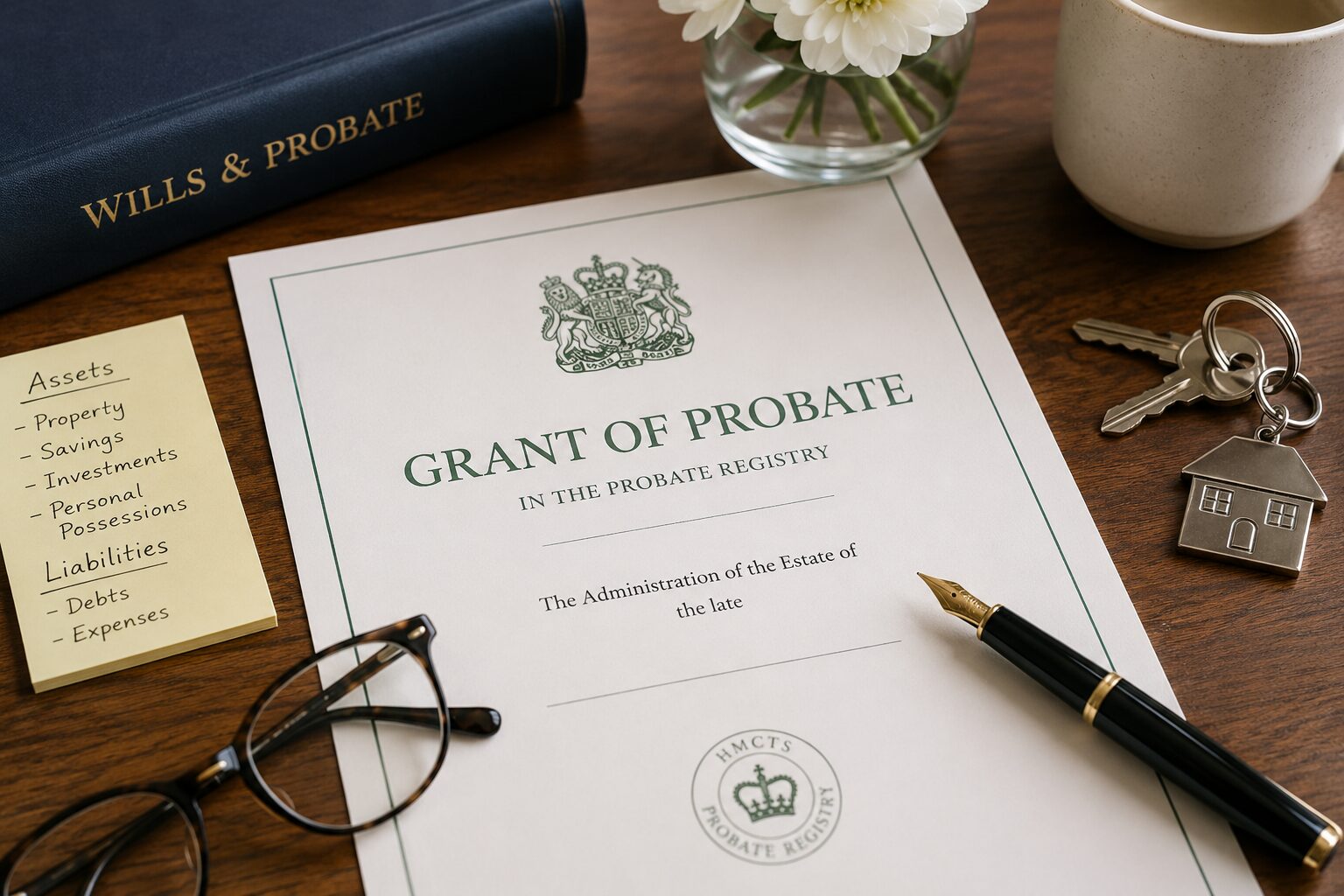
A grant of probate is a legal document, obtained from the Probate Registry, which grants the executor or executors named in the deceased’s Will the legal authority to act in the administration of their estate. Once the grant has been issued, the executors are then able to deal with the assets of the deceased’s estate in accordance with the terms of the Will.
Where the deceased left no Will, there will be no appointed executor and the next of kin would instead apply for a grant of letters of administration. This gives them similar authority to administer the estate, but the assets must then be distributed in accordance with the rules of intestacy rather than the wishes set out in a Will. (Letters of administration may also be required in the less common situation where there is a valid Will but no executor is able or willing to act.)
Is a Probate required at all times?
No, whether probate is required depends largely on the size of the deceased’s estate and on how their assets were owned. Where there is no property and only minimal savings, it is unlikely that probate would be required.
Probate will generally not be required where the deceased:
• Held assets jointly as “joint tenants” (such as a property, bank account or other savings). These pass automatically to the surviving owner by the right of survivorship and so fall outside the estate for probate purposes. This does not apply, however, where property is held as “tenants in common”, in which case the deceased’s share forms part of their estate and probate will usually be needed; or
• Left only a small estate, the overall value of which is low, often around £5,000.
It is worth bearing in mind that where the deceased owned a property in their sole name, probate will almost always be required before that property can be sold or transferred, regardless of the value of the rest of the estate.
Overview of the estate administration process:
- The administration process begins on the death of the deceased. Where the Will appoints an executor, that executor will generally need to:
Investigate and identify all of the deceased’s assets and liabilities, in order to establish the true value of the estate. - Assets can include any property, land, savings, investments and other personal possessions.
- Liabilities can include any of the deceased’s debts, ranging from bank borrowing to outstanding utility bills.
- Open an executor’s account and notify all relevant companies and organisations (such as the bank and utility providers) of the death. This is advisable at an early stage.
- Establish whether any Inheritance Tax is due and, where it is, report the estate to HMRC. For most straightforward estates (“excepted estates”), the necessary information is now provided as part of the probate application itself; where a full account is required, this is done using form IHT400. Any Inheritance Tax that is due must generally be paid by the end of the sixth month after the month of death and usually has to be paid (at least in part) before a Grant of Probate can be issued.
- Apply for a Grant of Probate. Once the application has been submitted, a straightforward grant is often issued within a matter of weeks, though current Probate Registry timescales vary and more complex cases can take considerably longer.
- Pay any debts of the estate that are payable, including funeral expenses.
- Arrange for the preparation of estate accounts, which set out the payments into and out of the estate, the valuation of each asset, any outstanding debts and the total amount available for distribution to the beneficiaries.
- Distribute the estate to the named beneficiaries in accordance with the terms of the Will
- Once the estate has been distributed and the remaining assets released from the executor’s control, the executor’s account can be closed, which brings the administration to an end.
As estate administration involves tax and legal obligations that depend on the particular circumstances of each estate, it is advisable to seek professional advice where there is any uncertainty.
 Back to Latest Thinking
Speak with us